
Women’s Wear
Salwar Kameez
Salwar kameez is a popular outfit for South Asian women, and has all but replaced the sari in Pakistan. The salwar is the pant-like bottoms also worn by men (see menswear email), and a kameez is a top strongly resembling a kurta or a dress with a waistline and flared skirt. A salwar kameez is also paired with a matching scarf or shawl called a dupatta to drape around the shoulders or to cover the head when modesty is necessary. Â
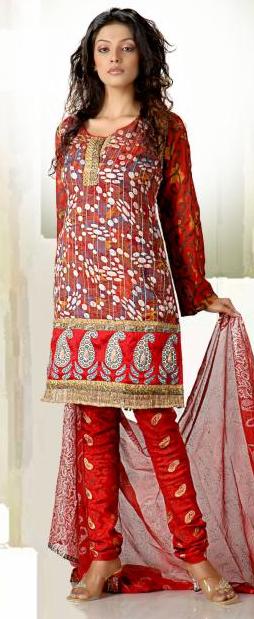
Salwar Kameez
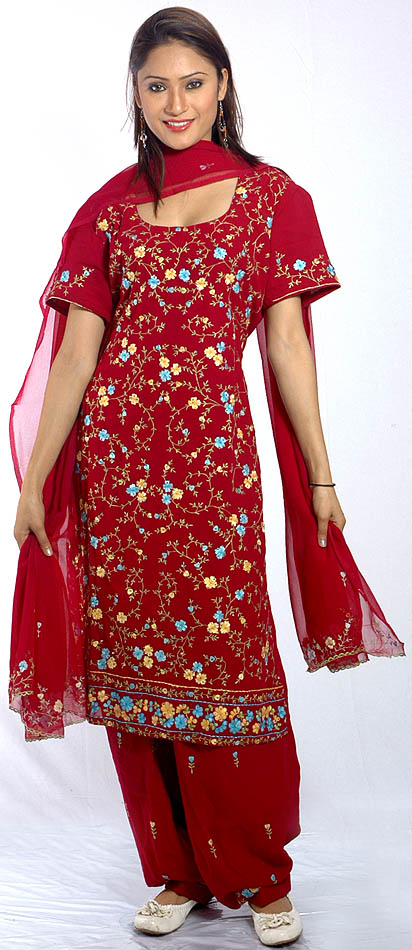
Salwar Kameez
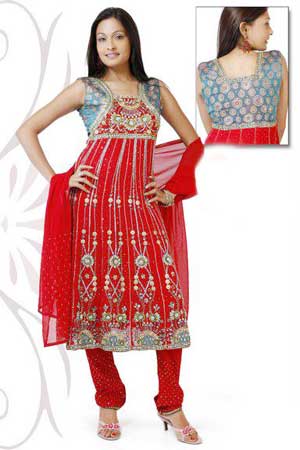
Salwar Kameez
Â
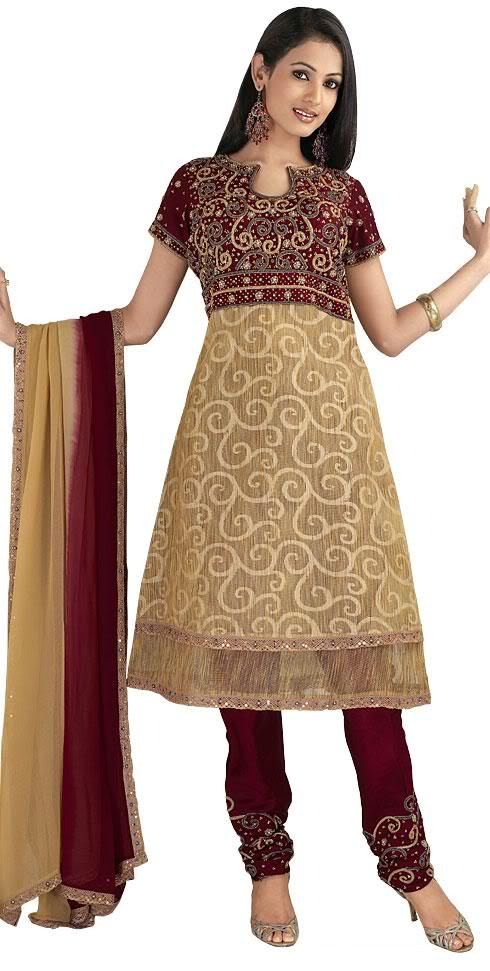
Salwar Kameez
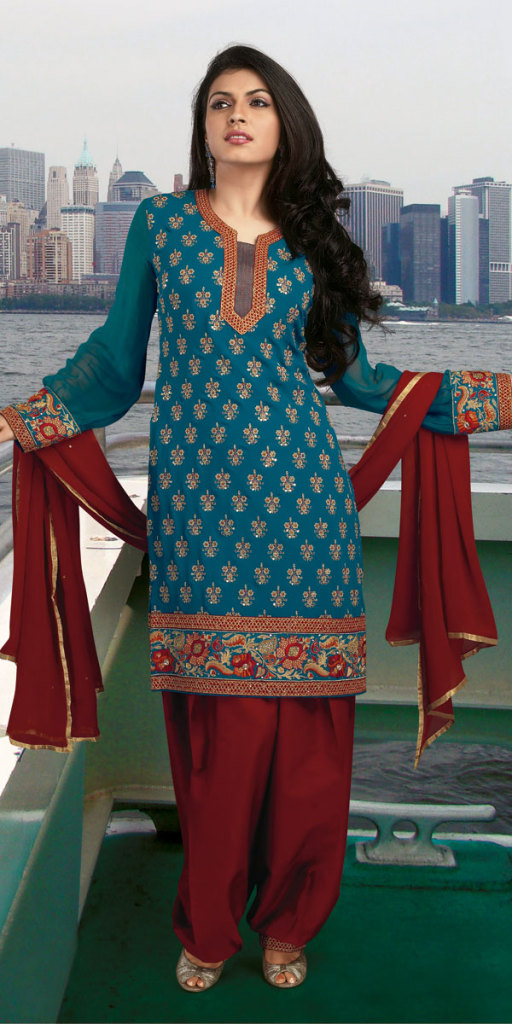
Salwar Kameez
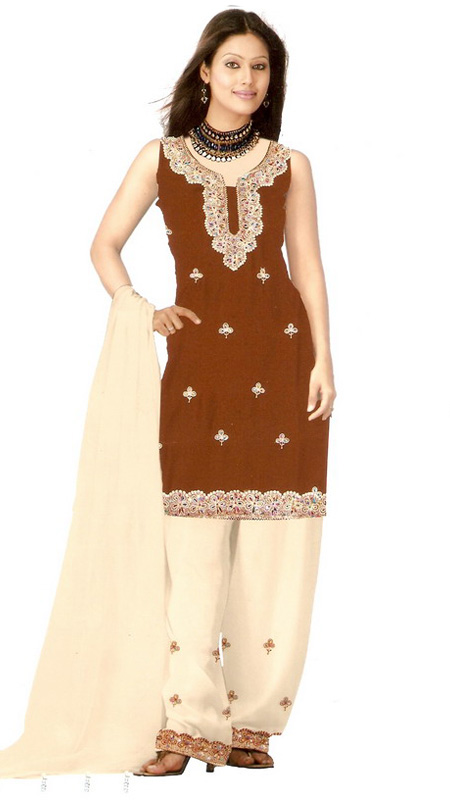
Salwar Kameez
Sari
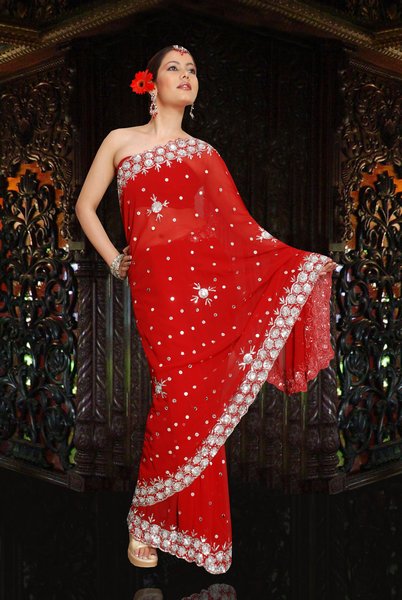
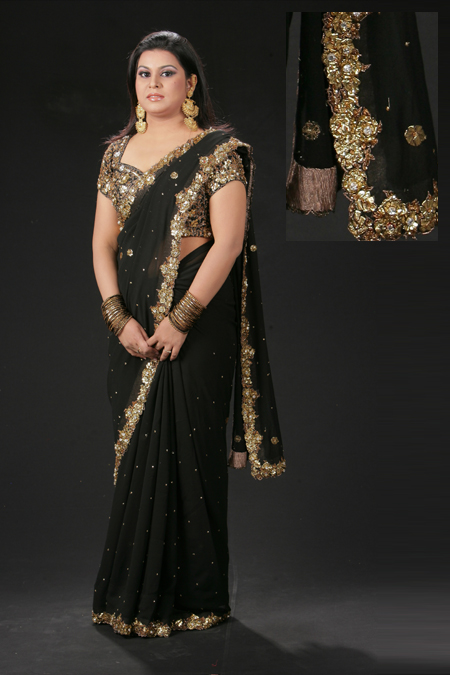
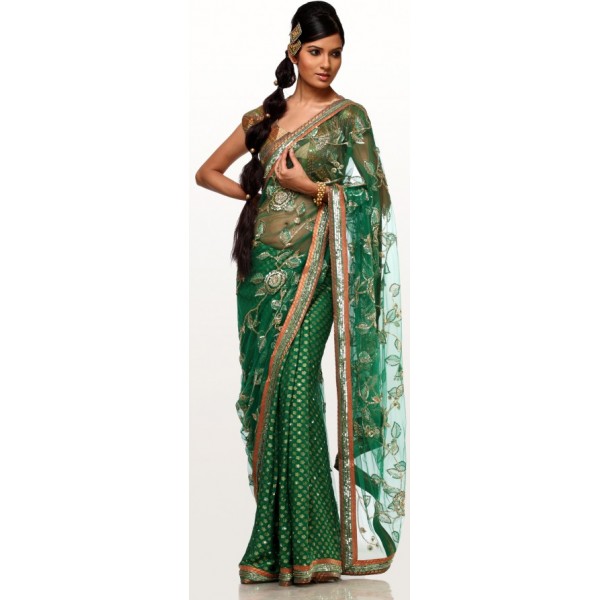
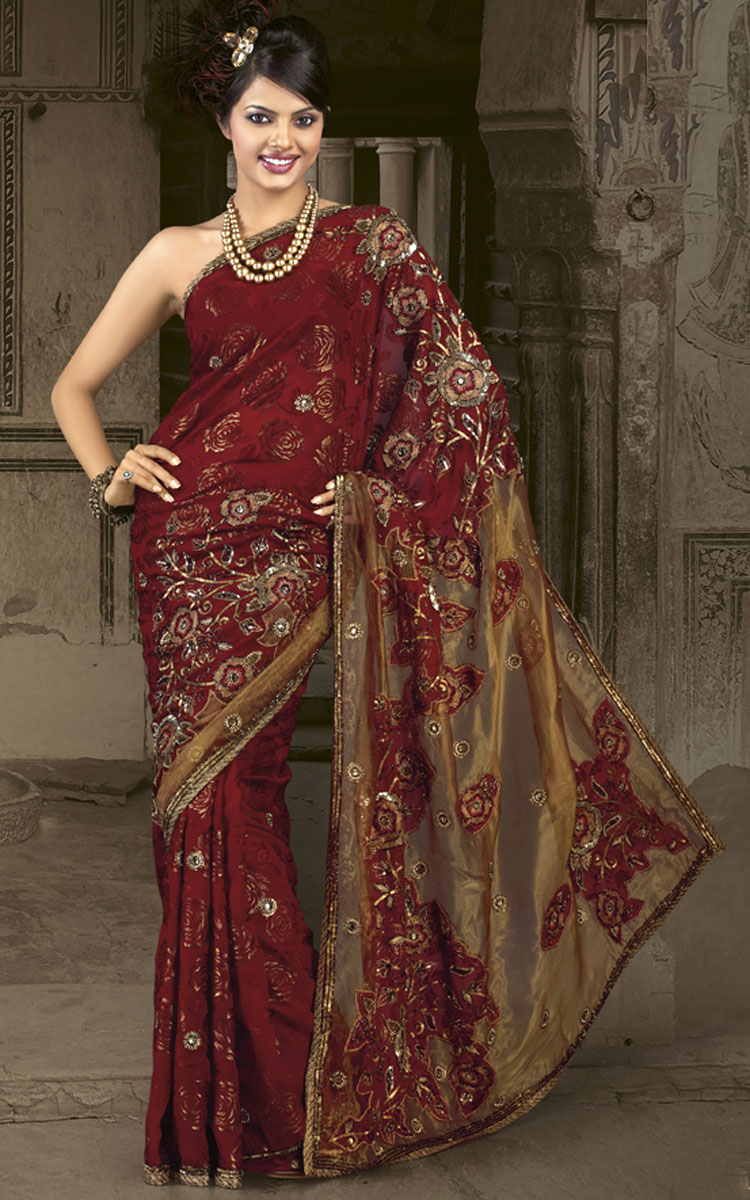
The word, sari, is derived from the Sanskrit word chira meaning “cloth.” The garment is steeped in history, and is widely worn today all over the subcontinent. The sari is thought to be over 3000 years old — possibly the longest continuously worn garment style in the world.  Â
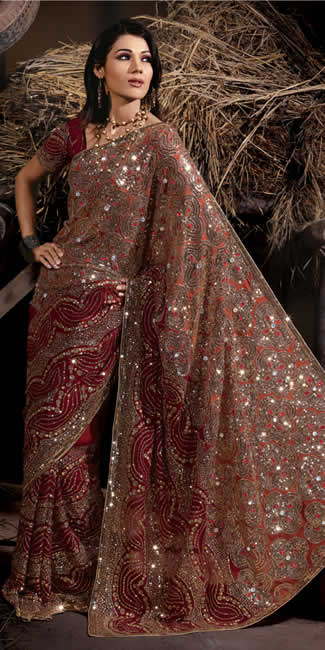
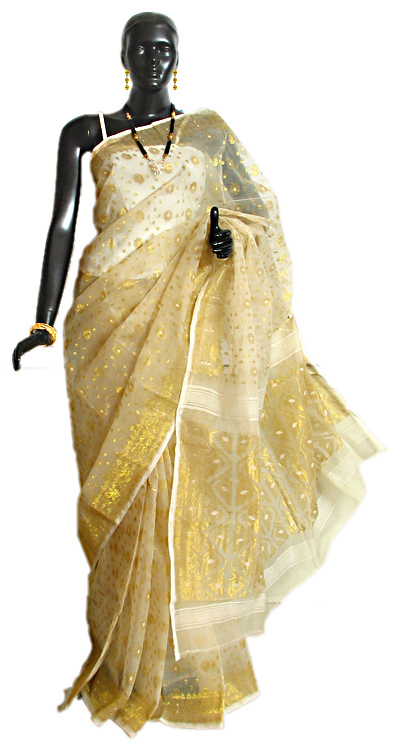
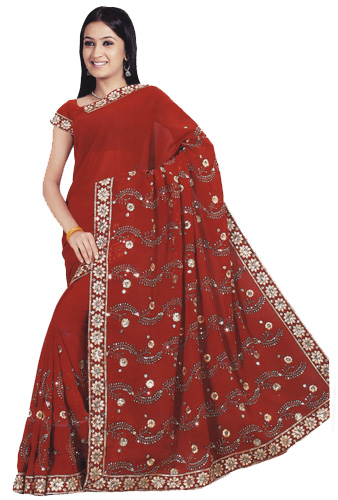
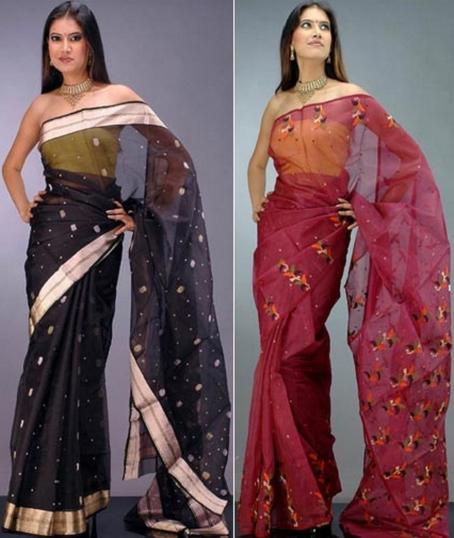
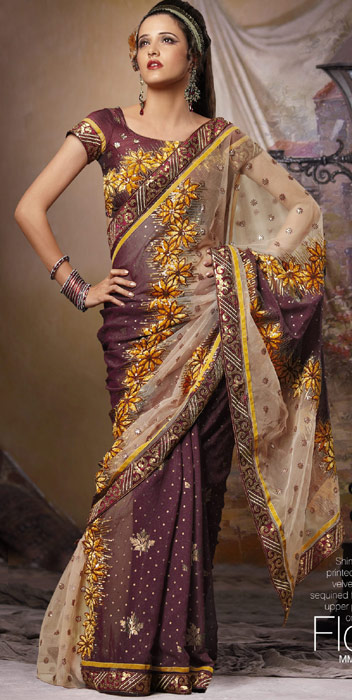
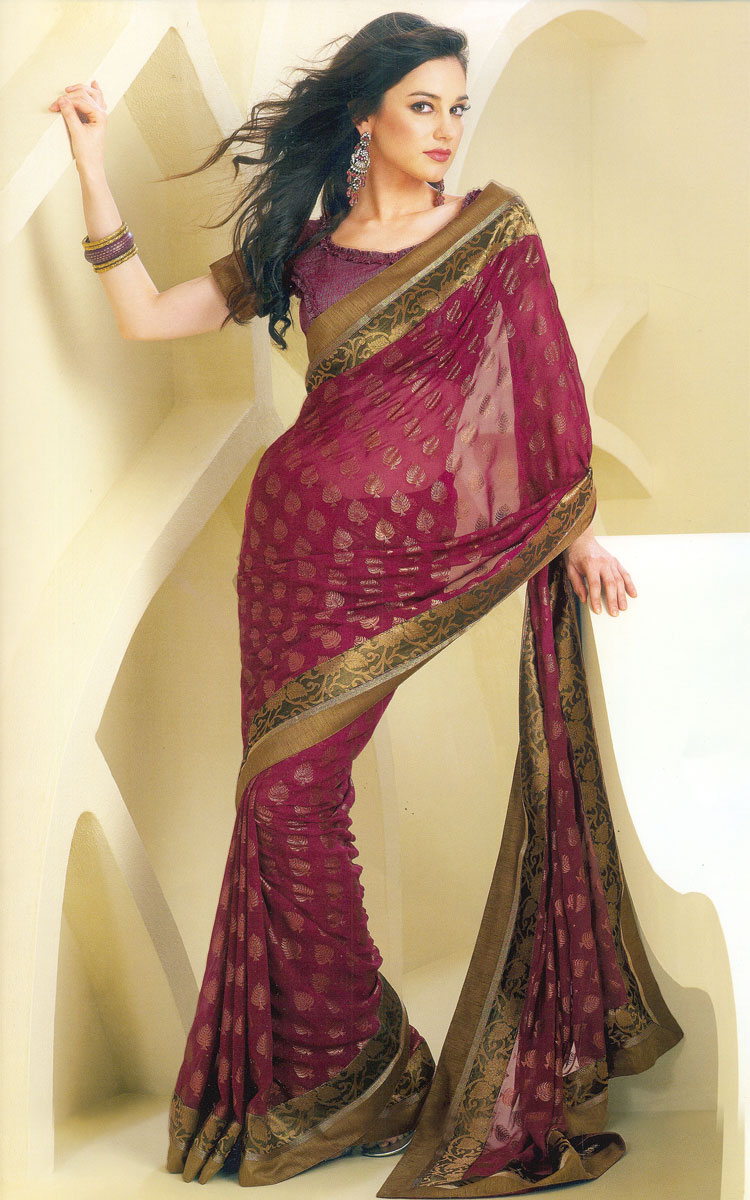
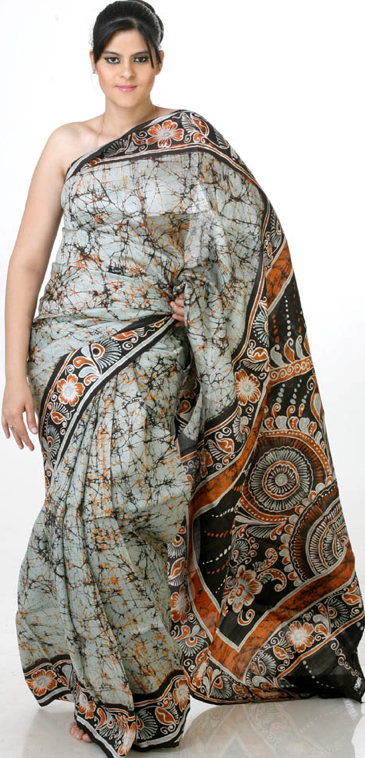
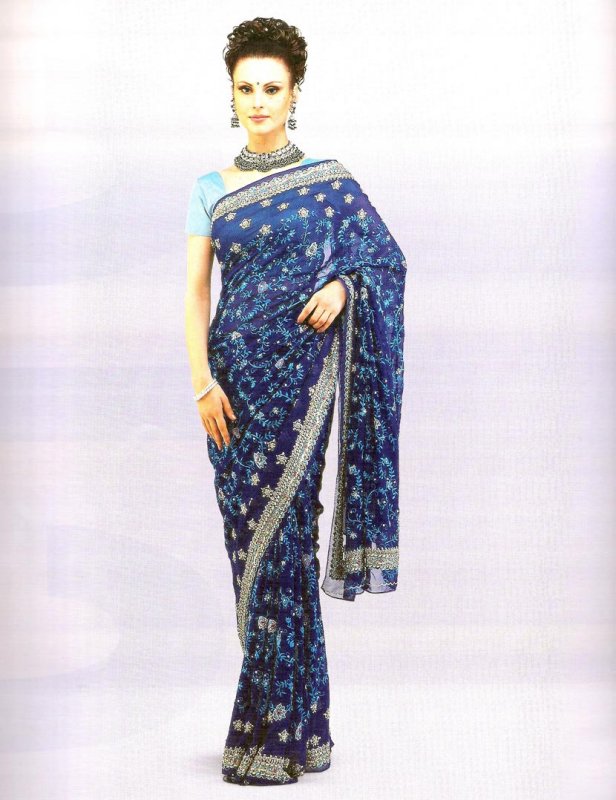
A sari is a strip of unstitched cloth of about 5 to 9 yards of fabric, 12 to 26 feet in length, and 4 feet wide that is draped over the body in various styles. The design theme of a sari usually consists of the main field which is framed on three sides by decorative borders. Two of these borders run along the longitudinal sides of the sari. The third border, known at the pallu, comprises the end piece of the sari, and is a more elaborate design version of the two longitudinal borders.
The sari is matched up with a blouse, sometimes called a jacket or choli, forming the upper garment. Traditionally, the sari blouse has short sleeves, scoop neck and is usually cropped around or above the waist to keep cool in the sultry South Asian summers. Additionally, the sari can be worn over a petticoat which serves as a slip. It’s not mandatory but it frequently works well with sheer or delicate fabrics. Available in as many colors as saris, the petticoat will be a simple, straight, usually cotton skirt with a drawstring or elastic waist in which pleats are tucked during the draping process.
There are many ways to drape a sari, but women in Sri Lanka typically prefer two or three different draping techniques. Originating from the Andhra Pradesh region of India, the nivi drape is referred to as the Indian drape because it is the most common sari draping style. The unfinished end of the sari is neatly tucked into the band of the petticoat on the waist. After wrapping the sari cloth around the waist once more, the sari is neatly folded into pleats, which are then tucked into the waistband of the petticoat just below the navel. Then after wrapping it around the body one more time, the other decorative end of the sari, called the pallu, comes diagonally in front of the torso and draped over the left shoulder. The Gujarati, or North Indian, draping style was a favorite of Indira Gandhi. It is similar to the nivi style except that the pallu is draped from back to front over the right shoulder.
The traditional sari drape for Sri Lankan women is the Kandyan, Osaria in Sinhala, style. While similar to the darivian drape style found in Tamil Nadu, the Kandyan drape is unique to Sri Lanka. The sari tucks in partially in the front and features a pleated rosette around the waist. The bride will be wearing a traditional Kandyan style sari for the poruwa ceremony.
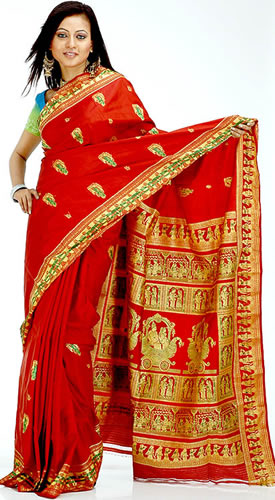
Sari
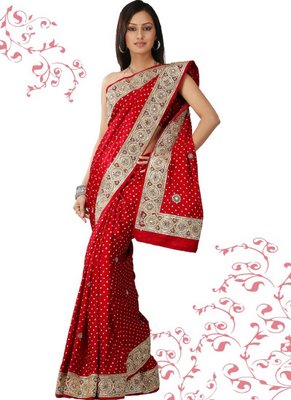
Sari
Sari
Sari
Sari
Sari
Sari
Sari
Sari
Sari
Sari
Sari
Â
Sari
Sari
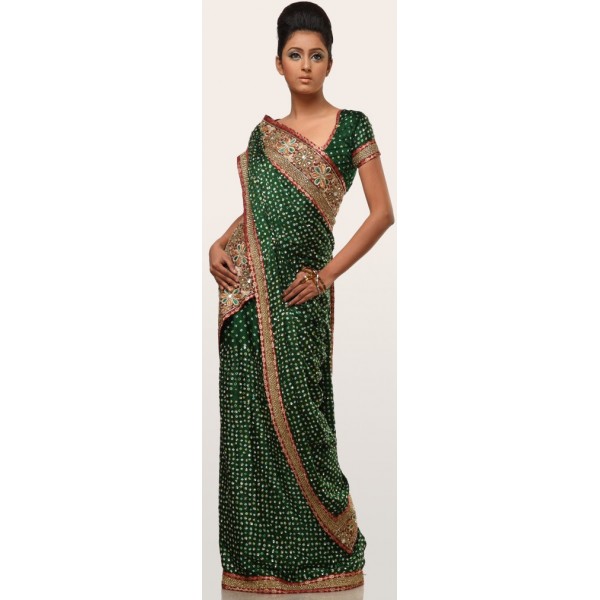
Sari with Different Drape
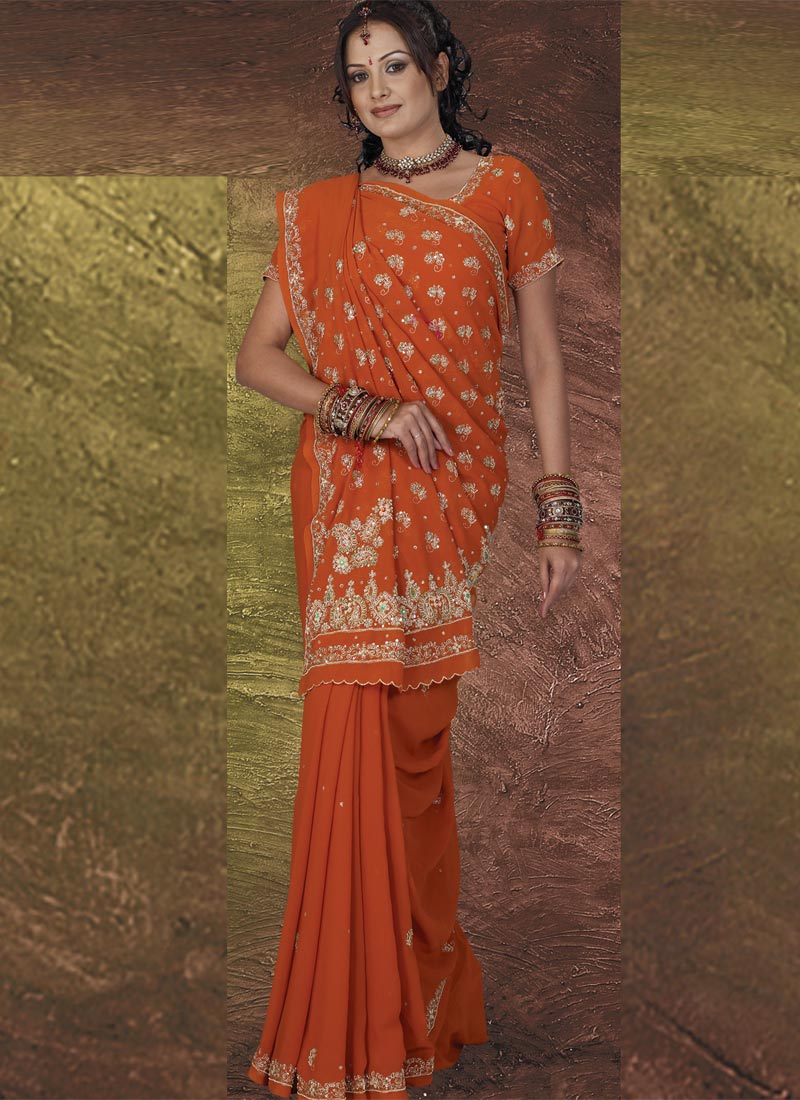
Sari with Gujarati Drape
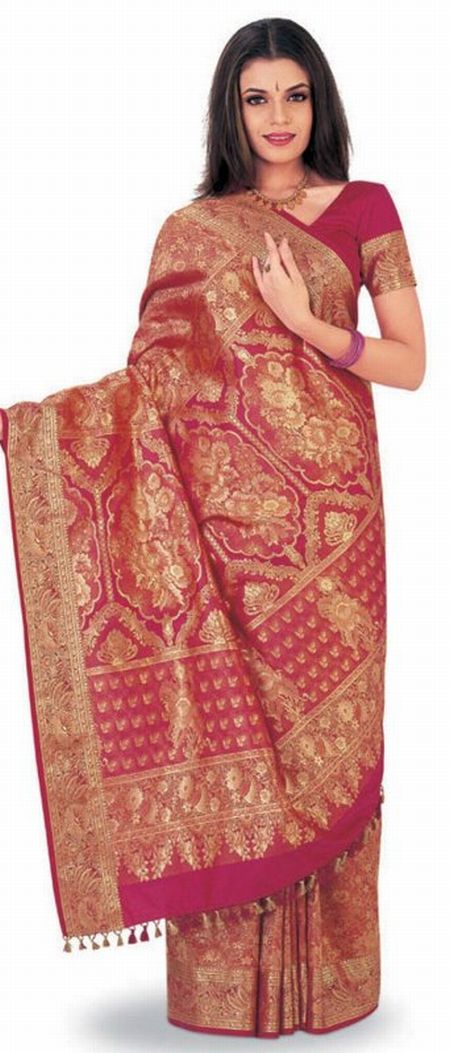
Sari with Gujarati Drape
Recommendations for Women’s Wear
If you are interested in a sari, and will be around on Sunday, March 14, you are welcome to join the shopping trip and select your sari outfit on your own. Honestly, shopping for a sari can be an overwhelming experience and it can be difficult to choose just one, or in my case, only 10 or 20. The choices available for saris are literally infinite.Â
If you are interested in a sari, and will not be around on Sunday, March 14, I will be happy to pick something out for you based on your preferences.
Saris come basically one size fits all. However, the blouse is carefully and closely custom-stitched to the wearer in almost all cases. Always sold in a matching set, sari blouses are not available for purchase off the rack. Even so, some blouse designs are easier to tailor than others which will be more suitable to our timeframe. I have spoken with my favorite sari shops and they are all willing to expedite our blouse orders to accommodate our schedule. However, the blouse will not be as perfectly or snuggly tailored as is typical, so you may need to adjust your expectations accordingly. If that sounds like a bummer to you, I would suggest a salwar kameez which is also a very beautiful, traditional, and iconic outfit totally appropriate for formal occasions. Salwar kameez basically come in small (I wear small), medium, and large and no tailoring is involved.   Â
Price ranges for saris run the full spectrum as well. Keep in mind that 6 yards is a lot of fabric to purchase so higher end fabrics like silk will be more expensive. Some silks from India require a week’s worth of work by three full-time weavers to weave one sari. Additionally, most of the embellishments and embroidery are hand-sewn according to traditional standards so more detail is more expensive as well. My favorite shop in Colombo specializes in a highly intricate form of embroidery that takes more than three months to complete one saree — beautiful, but pricey. Â
Go with a simple and elegant cotton blend sari (starting at around $100), or channel your inner Bollywood diva up to $10,000 or more! Seriously, it is easy to pick up a high-quality silk sari with moderate and tasteful embellishments for around $250. Salwar kameez are less expensive, but less often found in silk. Georgette or chiffon are more typical which keeps the costs lower. A salwar kameez suitable for a formal occasion starts at $50 or so for the three piece set.
There aren’t any real traditions regarding women’s footwear.Â
Also, do not stress out over the sari draping process! Even for the most seasoned South Asian sari wearer, it is very common to hire an expert to “dress” you for formal occasions. I have already reserved an army of dressers to make sure everyone is well-draped for the big day!
Action Items for Women
First, based on your travel schedule and your preferences, you need to decide if I’m shopping for you beforehand, or if you are shopping for yourself (by yourself or with the shopping group) on Sunday, March 14.
If I’m shopping for you, I need to know your preferences including:
Sari or Salwar Kameez
Favorite colors
Price range with maximum
Material
Raw silk, finished silk, chiffon, crepe, cotton, georgette, blend
Designs
Geometric, floral, figurative ornaments, brocade, stripes
Simple -OR- Intricate
Single hue -OR- Pattern
Subtle -OR- Ostentatious
Gold -OR- Silver
It would also be helpful to know what you don’t like. For instance, I hate paisley. Any hints are appreciated.